Political
REMARKS OF THE DEPUTY SPECIAL REPRESENTATIVE OF THE SECRETARY-GENERAL (POLITICAL), GUANG CONG, AT THE AFRICAN UNION PEACE AND SECURITY COUNCIL MEETING ON SOUTH SUDAN

PUBLISHED ON: September 10, 2025
By Web Desk
By Web Desk
Chairperson,
Members of the African Union Peace and Security Council,
Excellencies,
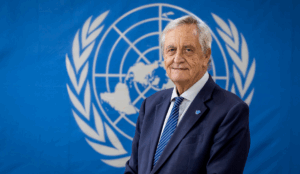
On behalf of the Special Representative of the Secretary-General, Nicholas Haysom, I would like to express our appreciation to the Council for convening its third meeting on the situation in South Sudan since the recent escalation of hostilities.
Equally, the visits by the Chairperson of the Commission, H.E. Mahmoud Youssouf, and the Panel of the Wise to Juba, demonstrate the African Union’s commitment to resolving the concerning situation in South Sudan.
Since our last briefing to the Council, we have witnessed the continued erosion of the hard-won gains previously made in the peace process, including the trust and confidence built among the parties to the Revitalized Agreement on the Resolution of the Conflict in the Republic of South Sudan (R-ARCSS).
We have also witnessed an escalation of armed clashes and stagnation in the implementation of the Revitalized Peace Agreement.
Our shared calls for a cessation of hostilities, de-escalation and return to dialogue have not yielded any concrete results. Instead, a pattern of violations and unilateralism persists, which continues to threaten the very purpose of a government of national unity to implement the Agreement.
The ongoing military offensives, including aerial bombardments and ground operations, continue unabated, undermining Chapter Two of the Peace Agreement. As a result, more than 130,000 people since March have been displaced, including tens of thousands who have crossed into Ethiopia. The conflict has also severely disrupted humanitarian operations in the affected states.
During the first three months of 2025, our teams have documented the highest number of civilian victims in a single quarter since 2020. If this trend continues, we are looking at a shift in conflict dynamics from sub-national and community-based violence to a more complex landscape shaped by ethnic divisions involving signatory parties and other actors.
The current security and political tensions have hampered all efforts to complete the outstanding transitional tasks, particularly security sector reform and the electoral and constitution-making processes. While government officials have publicly expressed their commitment to elections by December 2026, the Parties must take steps to return to dialogue and make the necessary decisions to move the country forward.